Rigid Setup Boxes vs. Folding Cartons: Which Do You Need?

When launching a new physical product, brand owners inevitably face the structural divide: Should the product be housed in a lightweight Folding Carton, or a heavyweight Rigid Setup Box? This decision dictates not only the perceived luxury of the brand but also fundamentally alters the entire supply chain, warehousing logistics, and shipping budget. Understanding the engineering and economic differences between these two formats is critical to a successful product launch.
The Folding Carton (The Agile Standard)
Folding cartons are the global standard for primary retail packaging. They are manufactured from single sheets of high-density paperboard—typically Solid Bleached Sulfate (SBS) or Kraft board—ranging in thickness from 14pt (0.35mm) to 24pt (0.6mm).
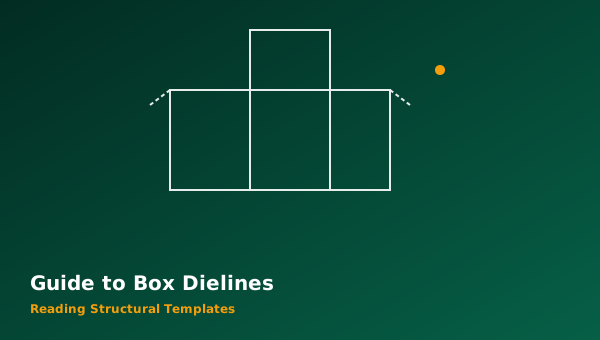
The Manufacturing Process: The factory prints the graphics directly onto the flat SBS board. A steel-rule die then punches out the flat shape and presses in the fold-creases. The factory runs the flat shape through an automated folder-gluer, which applies a single strip of glue to the side seam and presses it flat.
The Massive Logistics Advantage: Because folding cartons only have one glued side seam, they ship to your fulfillment center completely flat. You can fit 10,000 flat folding cartons on a single wooden shipping pallet. This drastically reduces inbound freight costs and warehouse storage footprints. They are incredibly cheap per unit and are the optimal choice for high-volume consumer goods, lightweight cosmetics, pharmaceuticals, and standard retail shelf displays.
The Drawback: They require manual labor at your facility. Your team must physically pop each box open, tuck the bottom flaps, insert the product, and tuck the top lid. Furthermore, they do not offer the monumental "weight" associated with ultra-luxury goods.
The Rigid Setup Box (The Pinnacle of Luxury)
Rigid boxes (often seen holding an iPhone, an Omega watch, or a premium bottle of Scotch) are engineered entirely differently. They do not fold, and they do not use standard SBS paperboard.
The Manufacturing Process: A rigid box utilizes a thick, completely inflexible inner core made of 1.5mm to 3.0mm solid grey binder board (chipboard). Because this core is ugly and grey, it must be wrapped. The factory prints graphics onto a thin, premium 128gsm art paper or textured linen. This wrap is then meticulously glued and wrapped around the rigid core, hiding all grey edges.
The Brand Advantage: Rigid boxes deliver an uncompromising, architectural permanence. The heavy weight and solid structure instantly communicate ultra-premium value. They frequently incorporate hidden magnetic closures, ribbon drawer pulls, and deep velvet-flocked foam inserts. Furthermore, they arrive at your facility 100% fully assembled. Your team simply drops the product in and places the lid on top.
The Massive Logistics Drawback: Because rigid boxes ship fully assembled, you are essentially paying to ship empty air across the ocean. While 10,000 folding cartons fit on one pallet, 10,000 fully assembled rigid boxes might require three entire shipping containers. The unit cost is significantly higher, and the warehousing costs are astronomical.
The Hybrid Solution: Collapsible Rigid Boxes
For brands that demand the tactile luxury of a rigid box but cannot afford the catastrophic shipping volume of pre-assembled air, Pak CustomBox engineers the Collapsible Magnetic Rigid Box. These utilize the exact same 2.0mm thick greyboard and premium wrapping papers, but the structural core is precision-scored in specific geometric patterns and fitted with hidden 3M adhesive corner strips.
This allows the heavy rigid box to ship completely flat (saving 70% in freight space). Upon arrival, the fulfillment team simply pops the box open, peels the adhesive covers, and snaps the magnetic corners together. Within seconds, it forms a permanent, non-collapsible luxury rigid setup box.
Topic FAQs
While you can apply the exact same luxury finishes (soft-touch, hot foil, spot UV) to a folding carton, you cannot replicate the architectural 'weight' and inflexible solid feel of a 3mm chipboard rigid box. The tactile difference is immediate.
Yes, significantly. A folding carton is a single piece of board printed and folded automatically at high speed. A rigid box requires cutting a thick core, printing a separate wrap paper, and carefully gluing the wrap around the core—a much more labor-intensive and material-heavy process.
A high-quality 18pt to 24pt SBS Folding Carton. Rigid boxes are typically reserved for products retailing at $100 or significantly higher, where the high unit cost of the packaging is absorbed by the product's massive profit margin.